
Funko Pop value guide
How Much Is My Funko Pop Worth?
Most Funko Pops are worth less than people hope, and a few are worth far more than people realise. The difference is almost never the character — it is the specific release, the variant, and the condition of the box. Here is the sequence that gets you to a real number.
The short answer
A Funko Pop is worth what comparable figures have recently sold for — the same character, the same box number, the same variant, in the same condition. Not what a seller is asking, and not what a price guide printed last year.
The overwhelming majority of Pops in circulation are common releases that trade between roughly $8 and $20. That is the honest baseline. The figures worth real money are the ones with something unusual about the release: a chase variant, a convention exclusive, a vaulted line that stopped production, a prototype, or a signed piece with authentication. If your figure has none of those markers, it is very likely a common release regardless of how much you like the character.
If you are trying to answer "is this worth anything at all", check for a chase sticker or an exclusive sticker on the box first. That single check resolves most cases in under ten seconds.
Step 1: Identify the exact figure, not the character
This is where most valuations go wrong. Searching "Batman Funko Pop" returns hundreds of different figures spanning fifteen years, several of which look nearly identical in a thumbnail and none of which share a price. A valuation built on the character name is not a valuation, it is a guess with a wide error bar.
What you need off the box or the figure:
- The figure number, printed on the box front and usually on the bottom — this is the catalogue key
- The series or licence name, such as Pop! Movies, Pop! Animation, Pop! Rocks
- Any sticker on the box window: chase, convention, retailer exclusive, or a numbered limited edition
- The release year, which is on the box bottom near the copyright line
- Whether the figure is a common size or an oversized, six-inch, ten-inch, or two-pack release
For a loose figure with no box, the number is often stamped on the underside of the foot or the back of the neck. If it is not, the sculpt and paint have to be matched visually — which is what an image search or a scanner app is for.
Step 2: Match the variant, because variants are separate markets
Two boxes on a shelf can carry the same number, the same character and the same artwork, and still be worth ten times apart. The variant is what separates them.
The four that move price the most are chases, exclusives, vaulted releases, and error or prototype pieces. A chase is a limited alternate version — glow in the dark, metallic, a different pose — inserted into a small fraction of the production run, usually around one in six, and marked with a sticker. An exclusive is a figure sold only through one retailer or at one convention, and the scarcity is real because the run was capped. A vaulted figure is one Funko has retired, so supply is fixed and only shrinks from there. Errors and prototypes are the rarest category and the hardest to authenticate, which is also why they attract the most fakes.
When you compare your figure against a sold listing, the variant has to match exactly. A chase selling for $95 tells you nothing about the common version of the same figure, which may be selling for $11 in the very next listing.
Step 3: Grade the box honestly
For common Pops, box condition barely registers — a $12 figure is a $12 figure with a dented corner. Above roughly $50, box condition becomes one of the biggest single factors in the final price, and collectors at that level are exacting about it.
Look at the four things buyers actually inspect: corner sharpness, window clarity and whether the plastic is dented or yellowed, creasing across the front panel, and sun fading on the printed colours. A box that has sat on a shelf in daylight for six years will have visibly duller reds and blues than one from storage, and that shows up in the price.
Be blunt with yourself here. Sellers routinely describe a creased, faded box as "mint", and the market corrects them at checkout. If you are valuing to sell, grade your box the way a buyer would if they were looking for a reason to negotiate.
Step 4: Read sold prices, never asking prices
This is the step that separates a real valuation from a fantasy one. Anyone can list a common Pop at $500. That listing will sit unsold indefinitely, and it will still appear at the top of a naive search — which is exactly why people conclude their shelf is worth thousands.
On whichever marketplace the figure trades on, filter for sold and completed listings rather than active ones. That gives you transactions instead of aspirations. Then read the cluster rather than the extremes: if eleven sales sit between $40 and $55 and one sits at $210, the figure is worth about $47, and the $210 is an outlier that needs explaining before it counts — usually a signed piece, a different variant, or a bundle.
Two adjustments make the number more honest. Auction sales with a single bidder land at the reserve rather than at market, and best-offer sales record the accepted offer, which is generally below the visible asking price. Both are real transactions and both belong in your average.
It is also worth checking how many sold at all. Six sales in the last month means a liquid figure with a dependable price. One sale in ninety days means the price is a single data point, and the next one could land 30% either side of it.
Recent sales, for calibration
A few of the highest completed sales currently in our feed. These are prices buyers actually paid, not what sellers were asking.
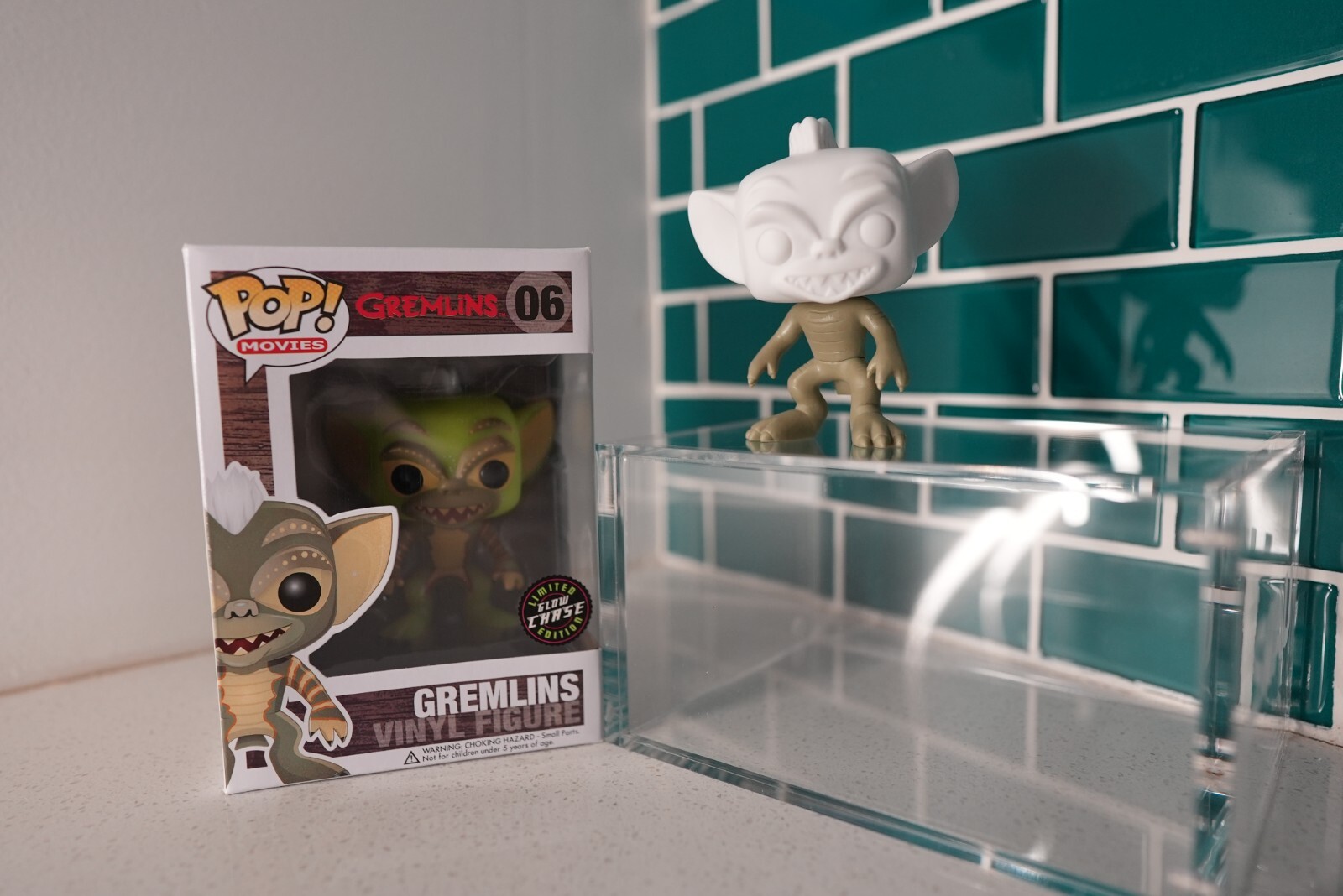
Funko Pop! Gremlins 06 Protype and Ungraded Glow Chase
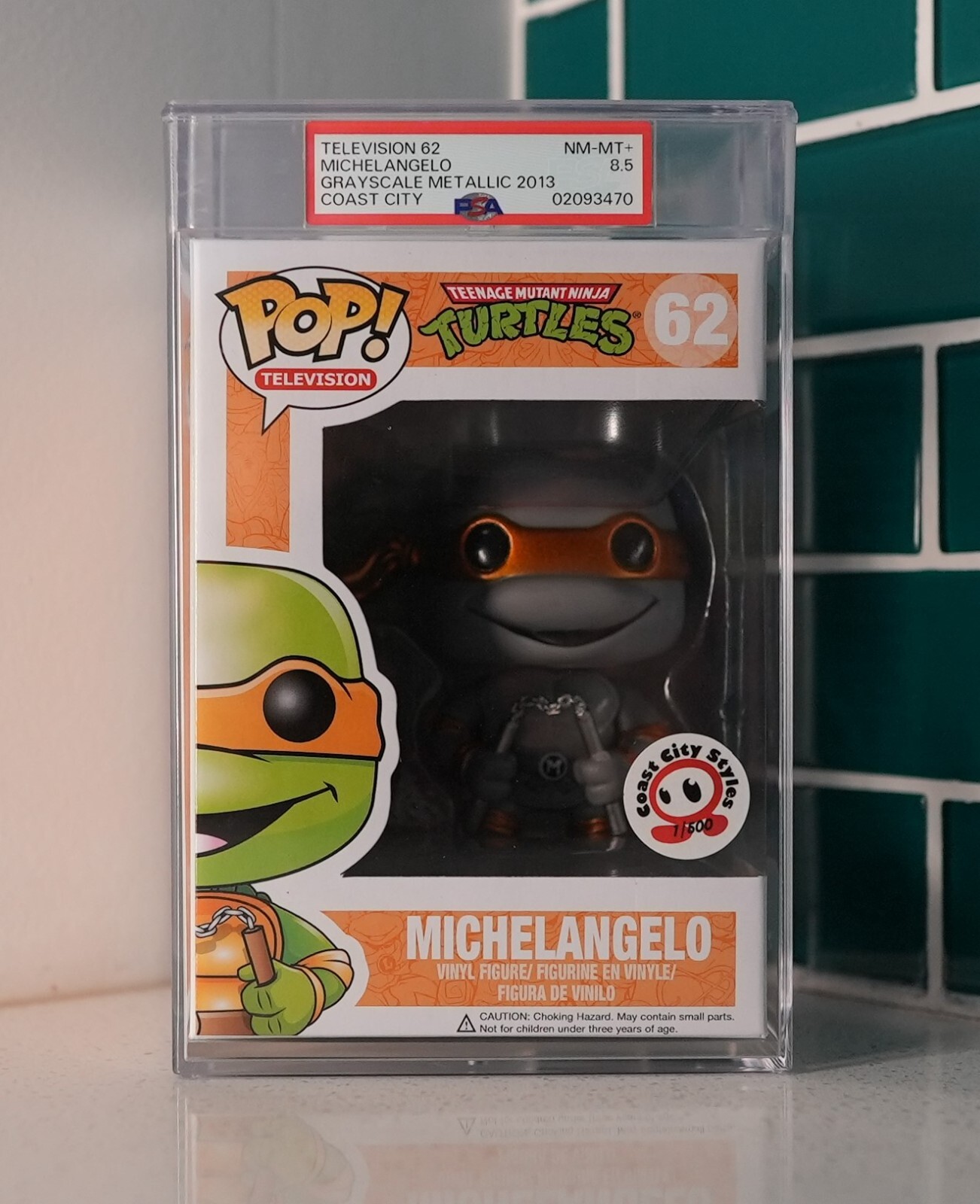
Funko TMNT: Michelangelo 62. Grayscale Metallic. Coast City 500. Graded PSA 8.5

PSA Graded 8.5 Unreleased Pokemon Funko Pop Metallic Charizard WonderCon 2022 LE
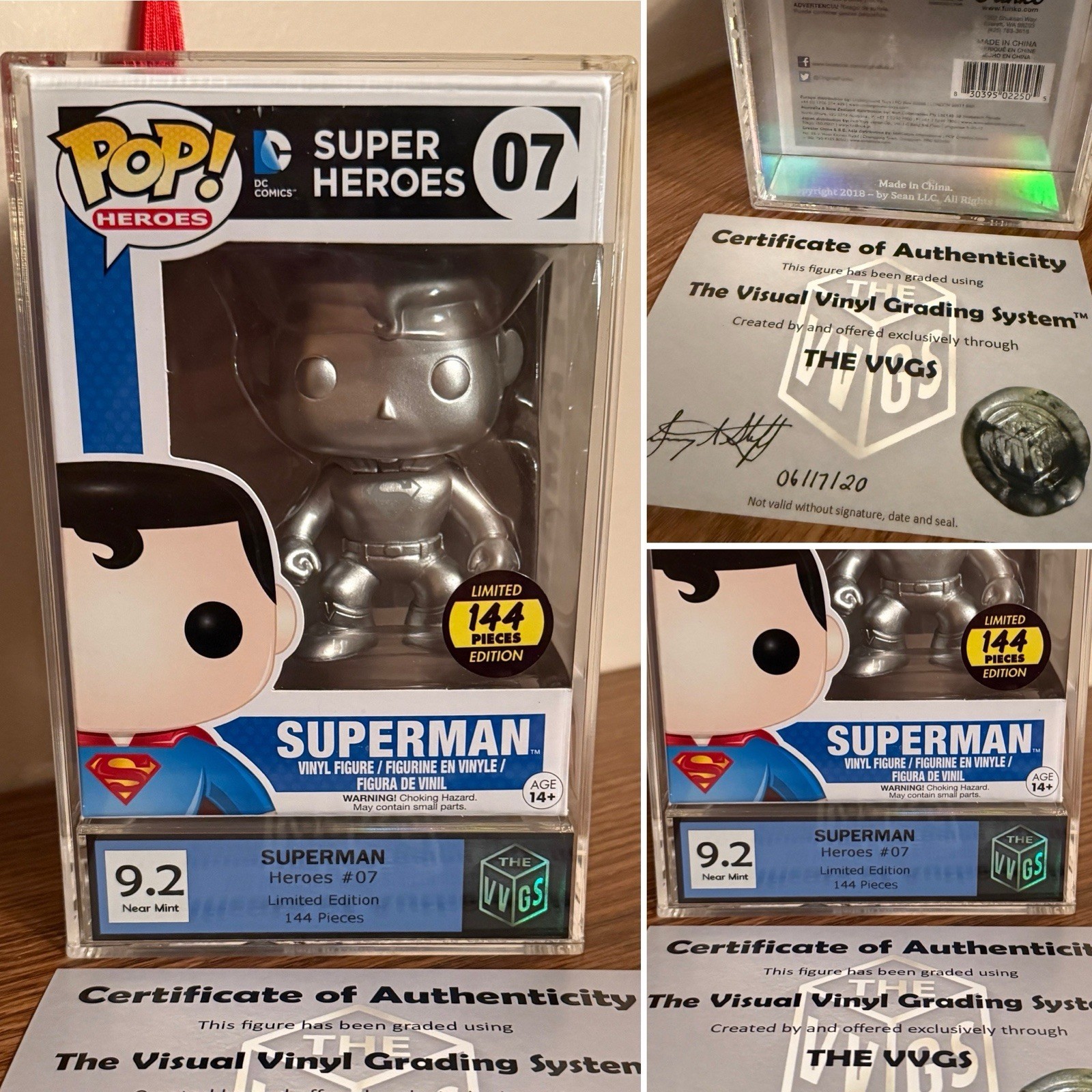
Funko Pop Heroes #07 Superman Silver Hot Topic Employee 144 Pieces VVGS graded
What a Pop is worth to a shop versus what it is worth to you
There are three different numbers hiding behind "what is it worth", and confusing them causes most of the disappointment in this hobby.
The retail replacement value is what you would pay to buy the figure today. The private sale value is what you would net selling it to another collector — typically the sold-comp price minus around 13% in marketplace fees and minus shipping, which on a boxed Pop is not trivial. The trade value is what a shop will offer, usually 40% to 60% of the private sale value, because they carry the inventory risk and need a margin.
So a figure with $60 sold comps is roughly a $60 figure to replace, about $45 in your pocket after fees and postage, and perhaps $30 across a shop counter. All three numbers are correct. Which one applies depends entirely on what you are actually going to do with it.
Five mistakes that inflate a valuation
Every one of these is common, and each one reliably produces a number that is too high.
- Pricing off active listings instead of completed sales — the single biggest source of inflated estimates
- Comparing a common release to a chase or exclusive because the artwork looks the same
- Treating a decade-old record sale as today's market, when the figure has since been reissued
- Ignoring box damage that a buyer will photograph and use to negotiate
- Assuming a popular character means a valuable figure, when scarcity and not popularity sets the price
Common questions
How much is the average Funko Pop worth?
Most standard releases trade in the $8 to $20 range on the secondary market, close to or below their original retail price. The figures that exceed that are chases, convention and retailer exclusives, vaulted releases, and pieces with authenticated signatures. If a figure has none of those characteristics, the common range is the realistic expectation.
Does the box need to be sealed for a Funko Pop to be worth money?
The figure does not need to be sealed, but the box needs to be present and in good condition for anything above common value. A boxed figure in sharp condition consistently outsells a loose one of the same release, and at the expensive end of the market the gap is large. Loose figures still sell, just at a discount.
Do Funko Pops go up in value over time?
Most do not. Production runs are large and Funko reissues popular figures, both of which cap appreciation. The ones that appreciate are limited by something structural — a capped convention run, a vaulted line, or a chase inserted at a low ratio. Buying common Pops as an investment has not historically worked out, and Funko's own recent financial difficulties have not helped secondary prices.
Where is the number on a Funko Pop?
On the box, the figure number is printed on the front, usually in a corner of the window panel, and again on the box bottom next to the barcode. On a loose figure, check the underside of the foot or the back of the neck — many but not all releases carry it there. Where the figure has no number at all, matching has to be done from the sculpt and the paint.
Is it worth getting a Funko Pop graded?
Only for genuinely valuable figures, and the landscape narrowed sharply when PSA stopped accepting Funko Pop grading submissions on December 1, 2025. Grading costs money per figure and adds shipping in both directions, so it only makes sense when the grade premium clearly exceeds that cost — which is rarely true below a few hundred dollars of raw value.
Where to go next
The three follow-on questions people ask after this one:
- How to tell if a Funko Pop is rare — the markers that separate a common release from a scarce one
- Where to check Funko Pop prices — what each price source actually measures
- Recent Funko Pop sold prices — recent completed sales, refreshed regularly