
Price sources compared
Where to Check Funko Pop Prices
Five sources will give you five different prices for the same figure, and none of them is lying. They are measuring different things: asking prices, historical averages, catalogue estimates and actual transactions. Knowing which is which is most of the skill.
The short answer
For deciding what a figure is worth today, completed sales for that exact variant are the best available source, because they are transactions rather than opinions. Everything else is useful for context — checking what a figure is, seeing a long-run trend, or spotting that a price has moved — but the final number should come from sales.
The distinction that matters more than the choice of website: an asking price is a wish, a sold price is a fact. A source that shows you active listings is telling you what sellers hope for. Sources differ mostly in whether they show you one or the other.
What each source measures
Roughly how the common options differ:
| Source | What the number is | Best used for |
|---|---|---|
| Completed and sold listings | Actual transaction prices | Deciding what to sell or pay right now |
| Active listings | Asking prices, unfiltered | Seeing current supply — not for valuation |
| Published price guides | Editorial estimate, updated periodically | A sanity check and a rough tier |
| Collector databases | Catalogue data with community-reported prices | Identifying the exact release and variant |
| Scanner apps | Identification plus matched marketplace comps | Getting from a photo to a number without typing |
| Sold-price feeds like our /sold pages | Filtered completed sales, tagged by grade | Watching the upper market and graded segment |
How to read sold listings properly
This is the workhorse method and it has a few traps.
Filter to sold and completed items first — this is the setting people forget, and skipping it is the single most common cause of wildly inflated valuations. Then narrow the search to the figure number rather than the character name, because a name search mixes a decade of different releases into one price range.
Once you have the results, read the cluster and not the extremes. If most sales sit between $35 and $48 with one at $190, the figure is a $40 figure and the outlier needs an explanation before it counts — usually a signature, a different variant, or a bundle sold as one lot.
Two adjustments make the reading more honest. Auction sales that closed with a single bidder cleared at the reserve rather than at market value. Best-offer sales show the accepted offer, which is below whatever asking price was displayed. Both are genuine transactions and belong in your average, but they explain why sold prices sit under listing prices as a rule.
Also check how many sold at all. Eight sales in a month is a liquid price you can rely on. One sale in three months is a single data point, and the next sale could land well either side of it.
Why price guides and databases disagree with the market
Not because they are careless. A published guide has to pick one number for a figure that trades across a range, and it has to hold that number until the next update. That works for tiering a collection and fails for pricing a specific sale in a moving market.
Collector databases have a different strength: they are usually the best way to establish which release you actually have, with catalogue numbers, variants and release years recorded properly. Identification is where most valuations go wrong, so a database is genuinely useful — it just answers "what is this" rather than "what is it worth today".
The practical workflow uses both. Identify the figure from a database or a scan, then price it from completed sales. Using a guide for identification and sales for pricing plays to each source's strength.
Sold prices
A sample from our own feed of completed sales. Every price here is a transaction someone actually completed, and the feed is refreshed as new sales land.
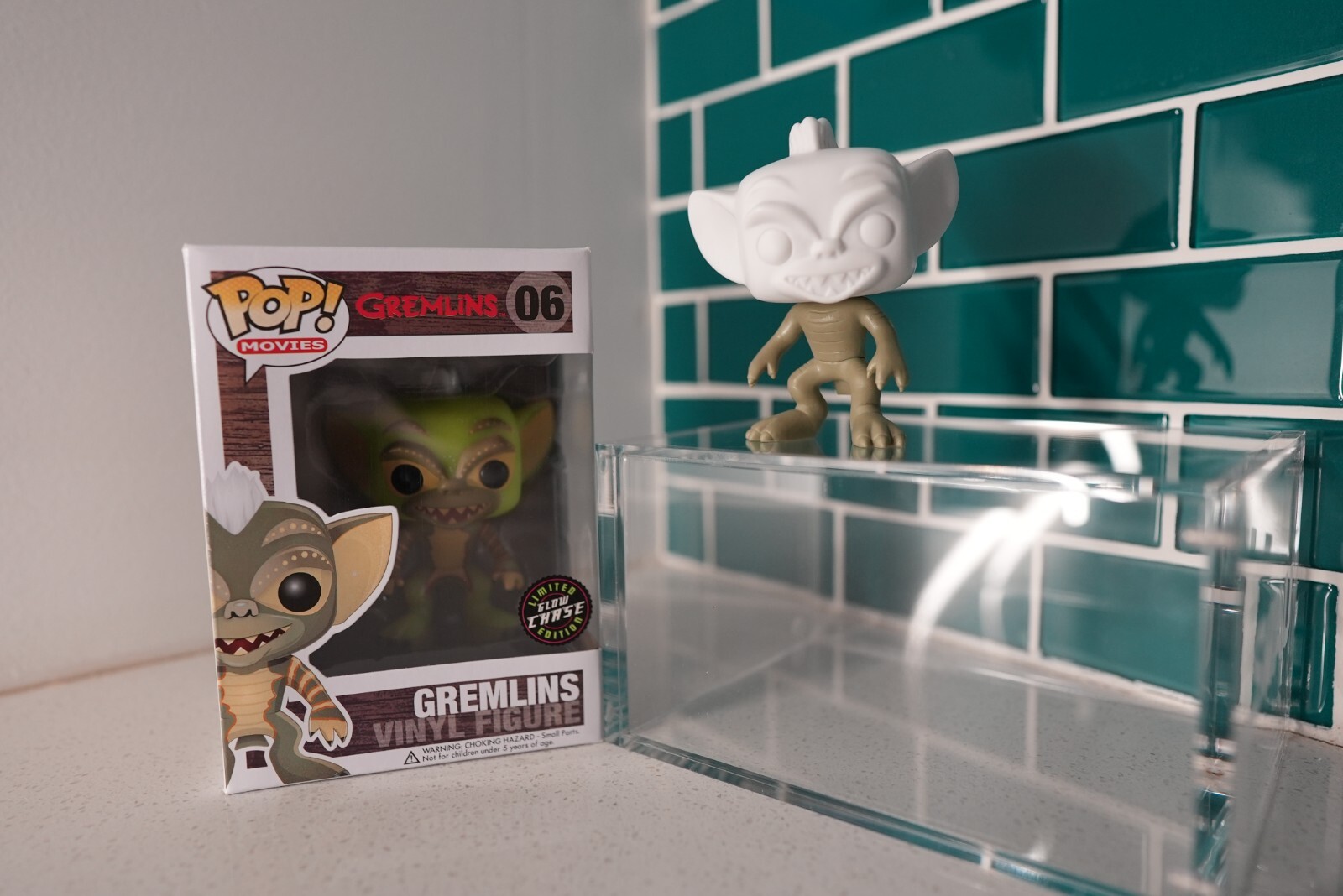
Funko Pop! Gremlins 06 Protype and Ungraded Glow Chase
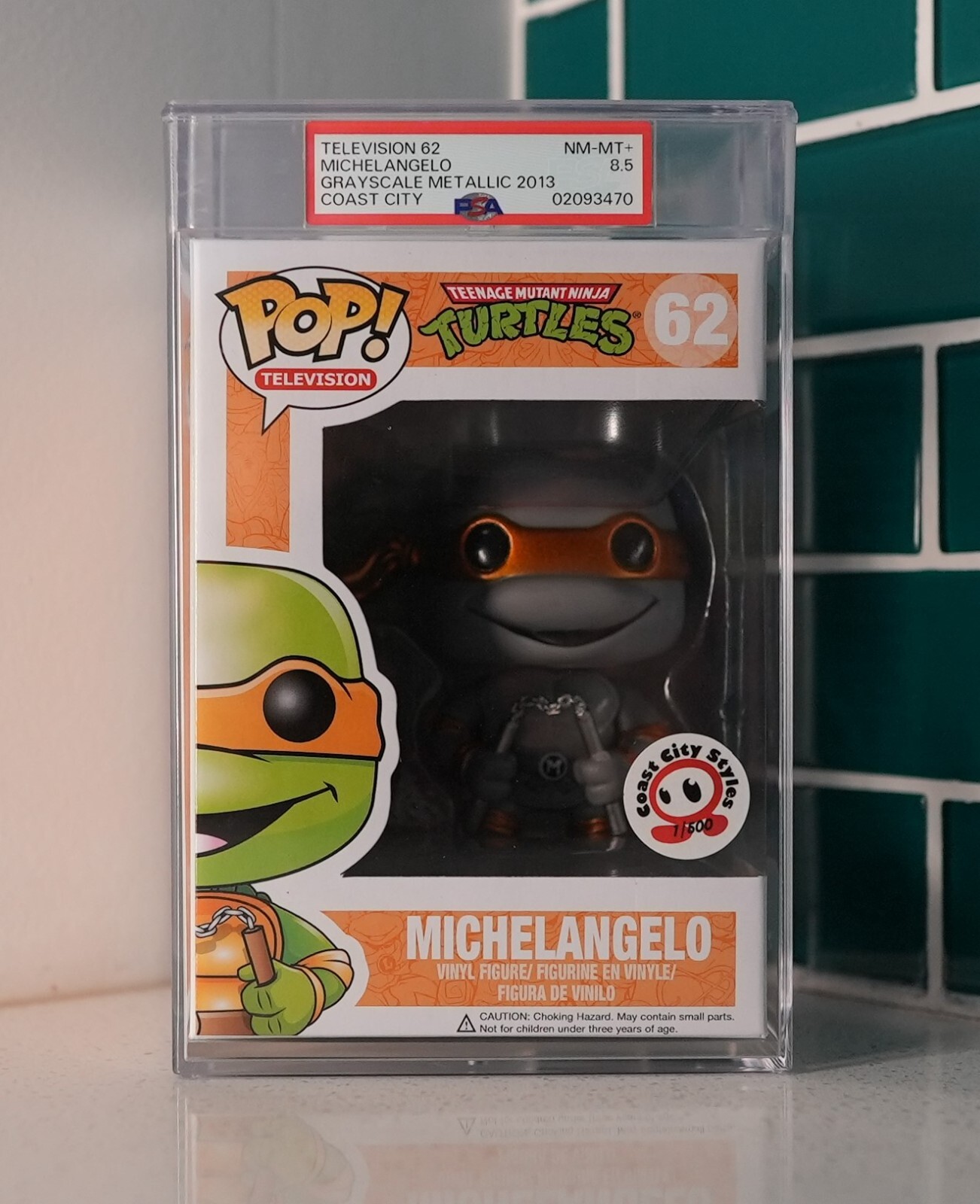
Funko TMNT: Michelangelo 62. Grayscale Metallic. Coast City 500. Graded PSA 8.5

PSA Graded 8.5 Unreleased Pokemon Funko Pop Metallic Charizard WonderCon 2022 LE
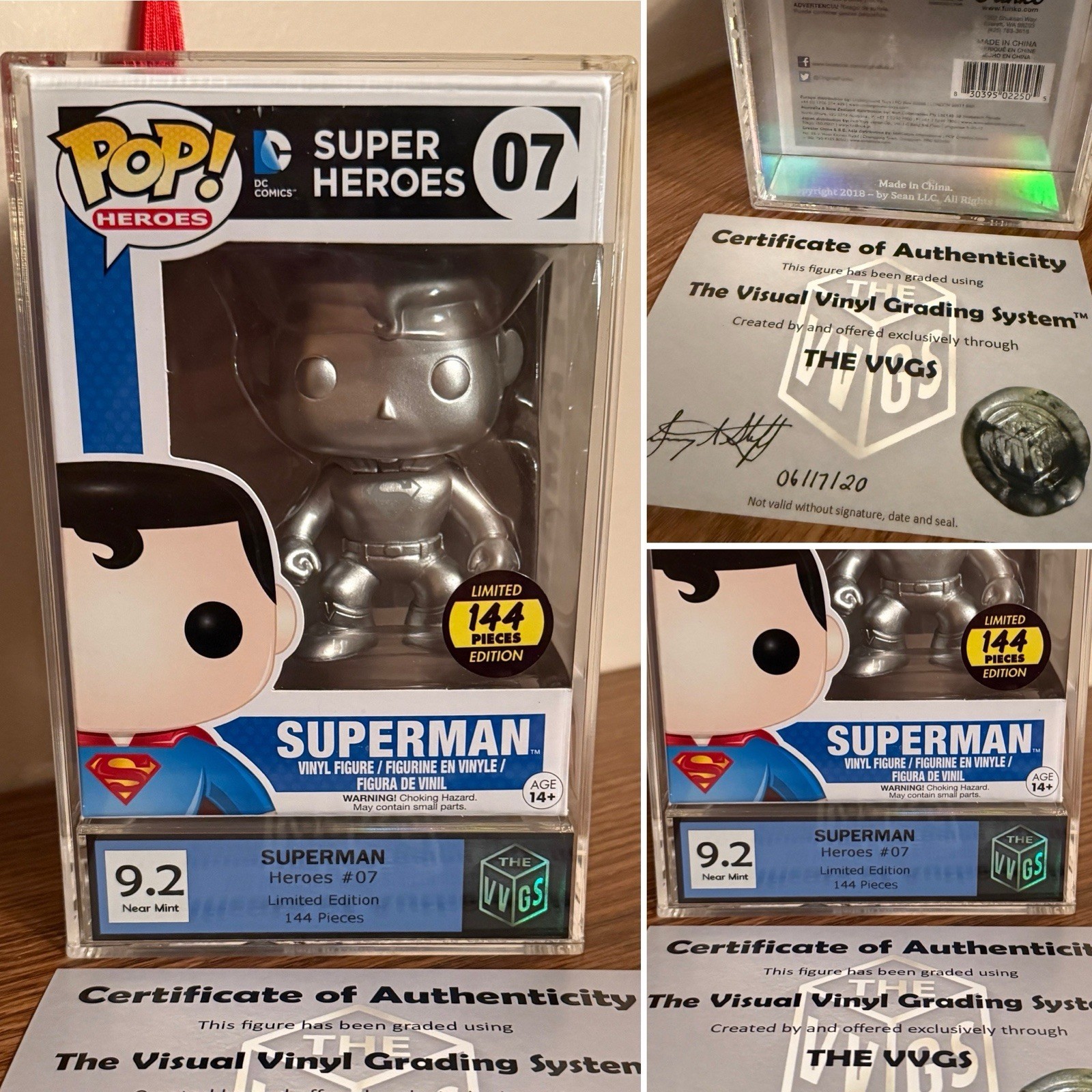
Funko Pop Heroes #07 Superman Silver Hot Topic Employee 144 Pieces VVGS graded
Different numbers for different purposes
"What is it worth" has at least four answers, and picking the wrong one is how people end up disappointed at the point of sale.
If you are selling privately, the number that matters is the sold comp minus fees and shipping. Marketplace fees are meaningful — typically around 13% — and postage on a boxed Pop with adequate protection is not trivial. A $60 comp is closer to $45 in hand.
If you are buying, the sold comp is your ceiling, not your target — paying above recent sales means paying above market. If you are trading into a shop, expect roughly 40% to 60% of the private sale value, because the shop takes on the inventory risk. And if you are insuring a collection, replacement cost is the right basis, which is the buying number rather than the selling one.
All four are defensible. Being explicit about which one you are quoting prevents most of the arguments in this hobby.
How often to re-check
Funko prices move on events rather than on a schedule: a vaulting announcement, a convention, a licence getting a new film or series, a re-release that floods a figure that had been scarce. A price you checked eight months ago is not a price, it is a memory.
For a collection you are actively managing, a check every few months on the top handful of pieces catches most of the movement, since value is concentrated in a few figures rather than spread evenly. For a single figure you are about to sell, check within the week — that is when a stale number costs you real money.
Common questions
What is the most accurate Funko Pop price guide?
The most accurate source is completed sales for the exact variant you own, on the marketplace where that figure actually trades. Published guides are useful for tiering and for a sanity check, but any single quoted number will lag a market that moves on releases and announcements.
How do I see sold prices on a marketplace?
Run your search, then apply the sold items and completed items filters in the search options. Without those filters you are looking at asking prices, which is the most common reason people overestimate what their collection is worth.
Is there a free way to check Funko Pop values?
Yes — the sold-listing filter on the major marketplaces is free and is the primary source most paid tools are built on top of. What paid or app-based tools add is speed and identification: getting from a photo to the right figure without typing catalogue numbers, which is where most of the error creeps in.
Why do Funko Pop prices vary so much for the same figure?
Usually because the results include more than one thing: standard and chase versions share a figure number, boxed and loose figures sell side by side, and graded slabs appear in the same search as raw pieces. Narrowing to one variant and one condition collapses most of the range.
Do Funko Pop prices drop after a re-release?
Frequently, yes. Scarcity is what supports elevated prices, and a re-release or a similar new sculpt undermines it. This is the main risk in treating common Pops as an investment: supply is under the manufacturer's control, not the market's.
Where to go next
- Recent Funko Pop sold prices — our own feed of completed sales
- How much is my Funko Pop worth — the four-step valuation method
- Funko Pop grading in 2026 — how to price a slab against the right comps